Giving students confidence in every ride.
How a campus-only EV scooter app replaced WhatsApp bookings with live availability, battery visibility and a pre-book feature that came from watching what students still struggled with after launch.
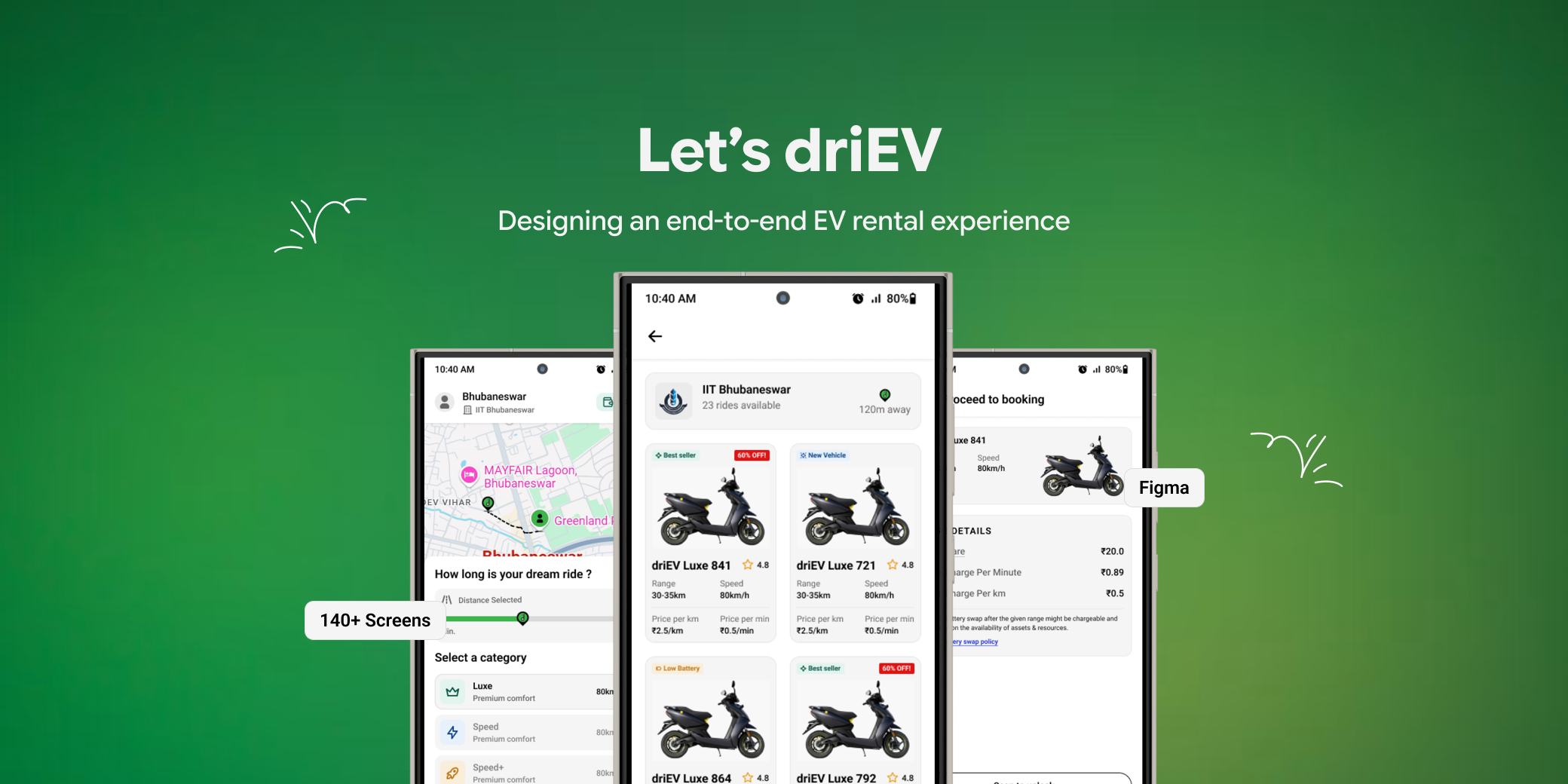
One company, two business models
driEV rents EV scooters in Bhubaneswar and has since expanded to Bengaluru. It runs two separate models, each with its own product, pricing and rules. This case study covers the Community model — the Rental model is covered in the website case study.
Booking a scooter meant waiting for a WhatsApp reply
Before the app, students booked by messaging the company’s WhatsApp Business account and waiting for a manual answer. It cost the business revenue and trust.
- Slow responses and missed messages
- No real-time information on which vehicles were available
- No battery information, so students sometimes arrived to a low-charge vehicle
- Lost revenue and low trust in the service
Students were uncertain, not reluctant
I visited stations, watched how students approached the vehicles, interviewed the operations team and students, and read through the WhatsApp message logs.
The most common question students asked was whether any vehicle was free.
Vehicles often had only 20 to 30 percent charge when students arrived.
Demand spiked at 8–10 AM and 4–6 PM, with no way to plan ahead.
A WhatsApp confirmation felt unofficial.
How might we give students confidence about availability and battery, so they never message or travel to an empty station?
From campus login to receipt
- 01Login
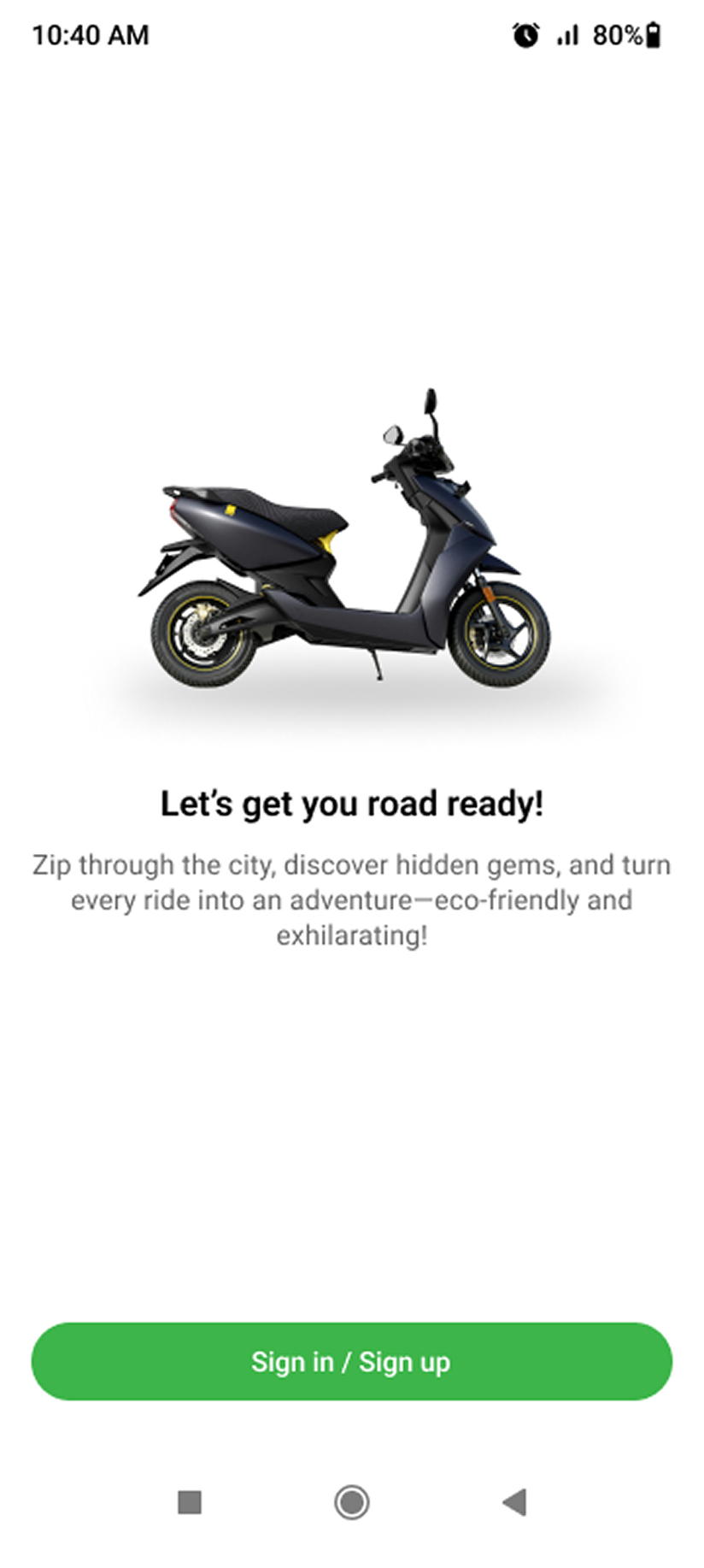
Sign in with a campus ID, which locks access to your own station.
- 02Browse
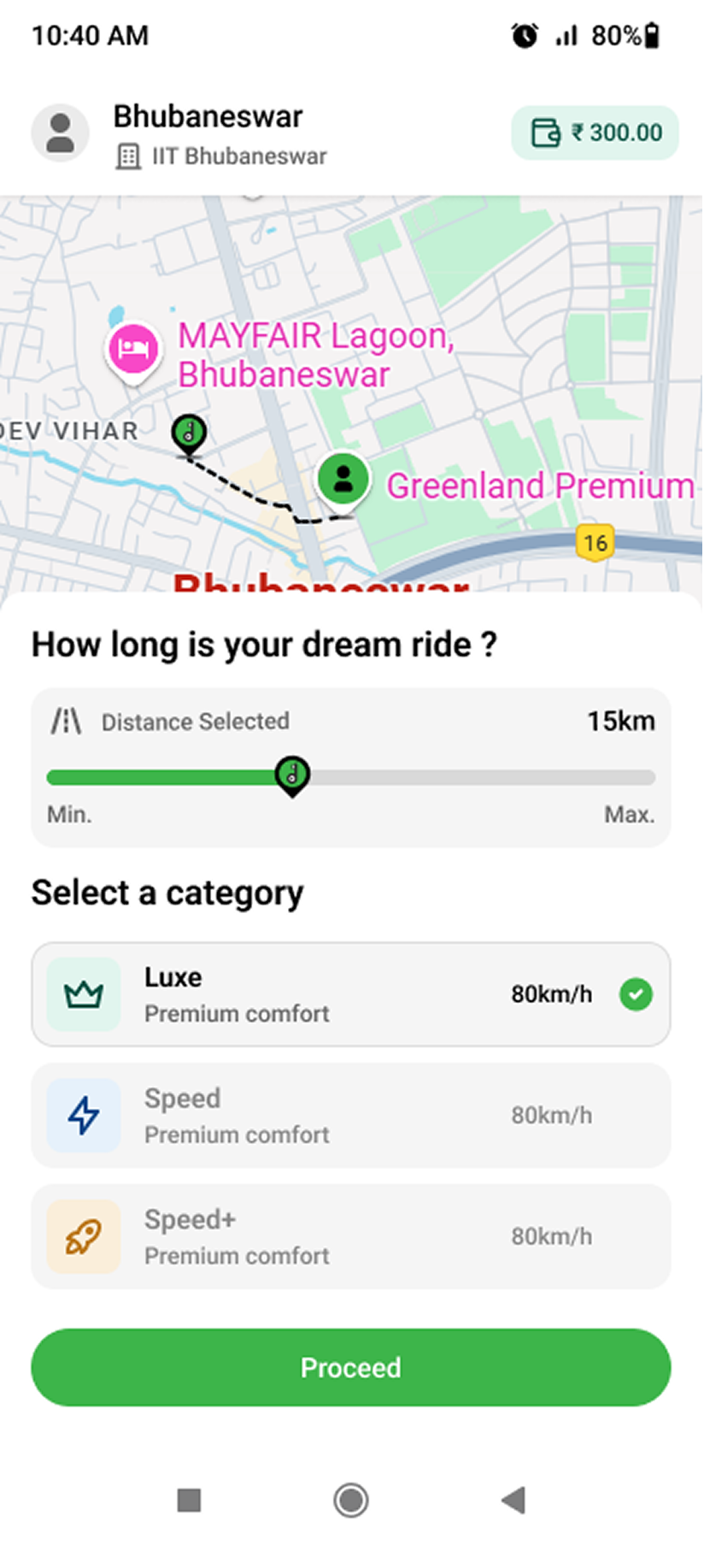
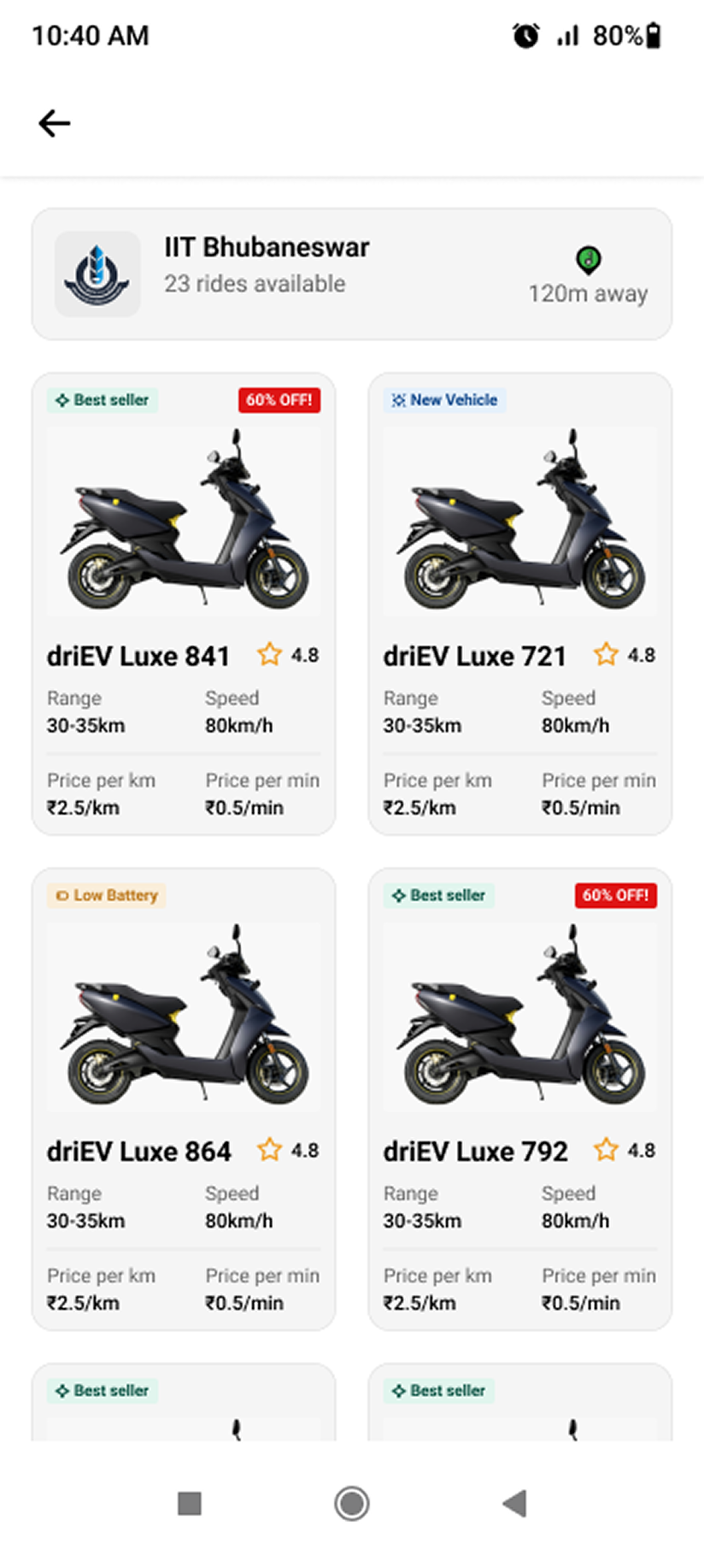
See vehicles at your station with live battery and range.
- 03Book or pre-book
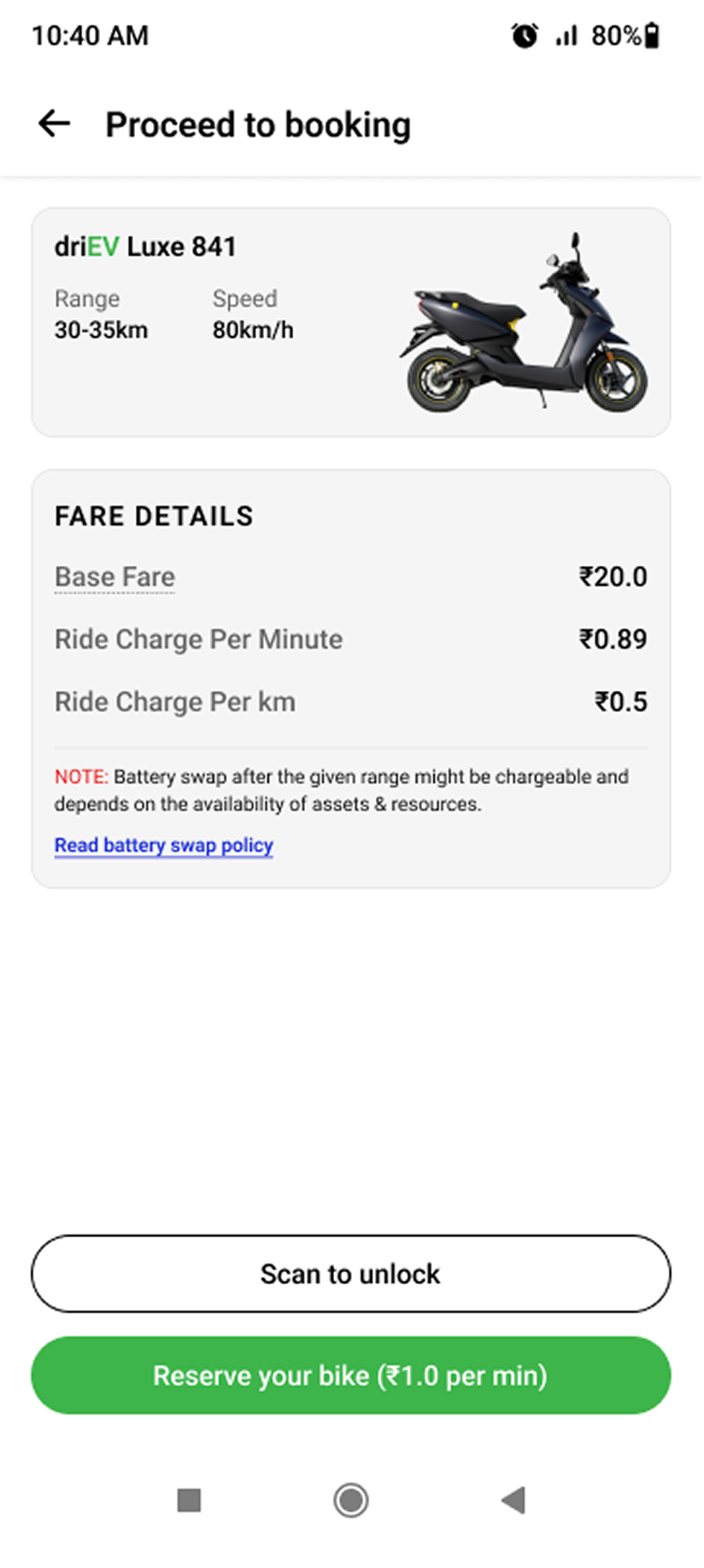
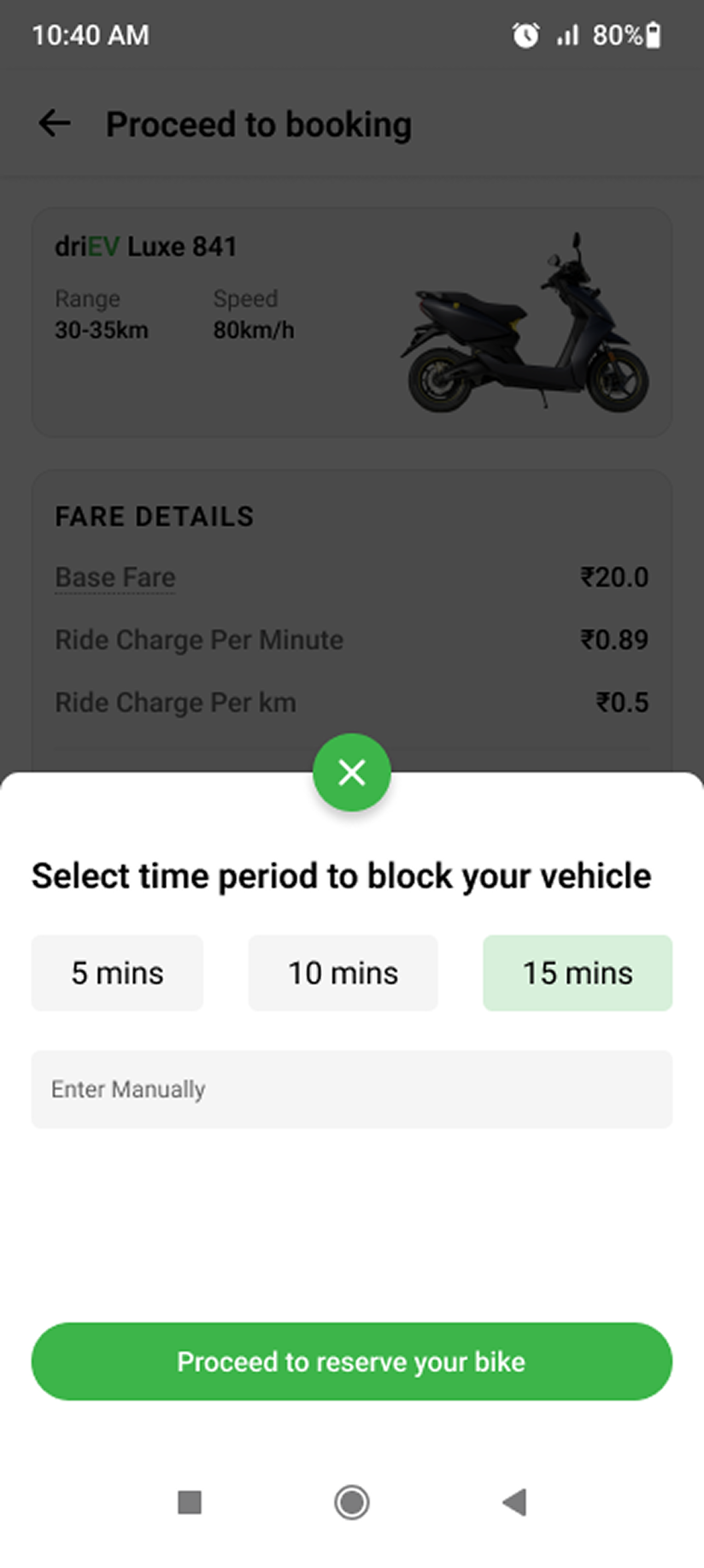
Book now, or hold a future slot with a small token.
- 04Ride
Take the vehicle from the station and ride.
- 05End ride
Return the vehicle to the same college station.
- 06Receipt
See time, distance and cost for the ride.
V1 fixed booking. V2 fixed availability.
Log in, see your station, book, ride
Students log in with a campus ID, see vehicles at their station with live battery percentage and estimated range, select one, book, ride, end the ride and see a receipt.
What we learned after launch. Students still complained that every vehicle was already taken when they opened the app. Booking was fixed. Availability was not.
Hold a future slot, pay a small token
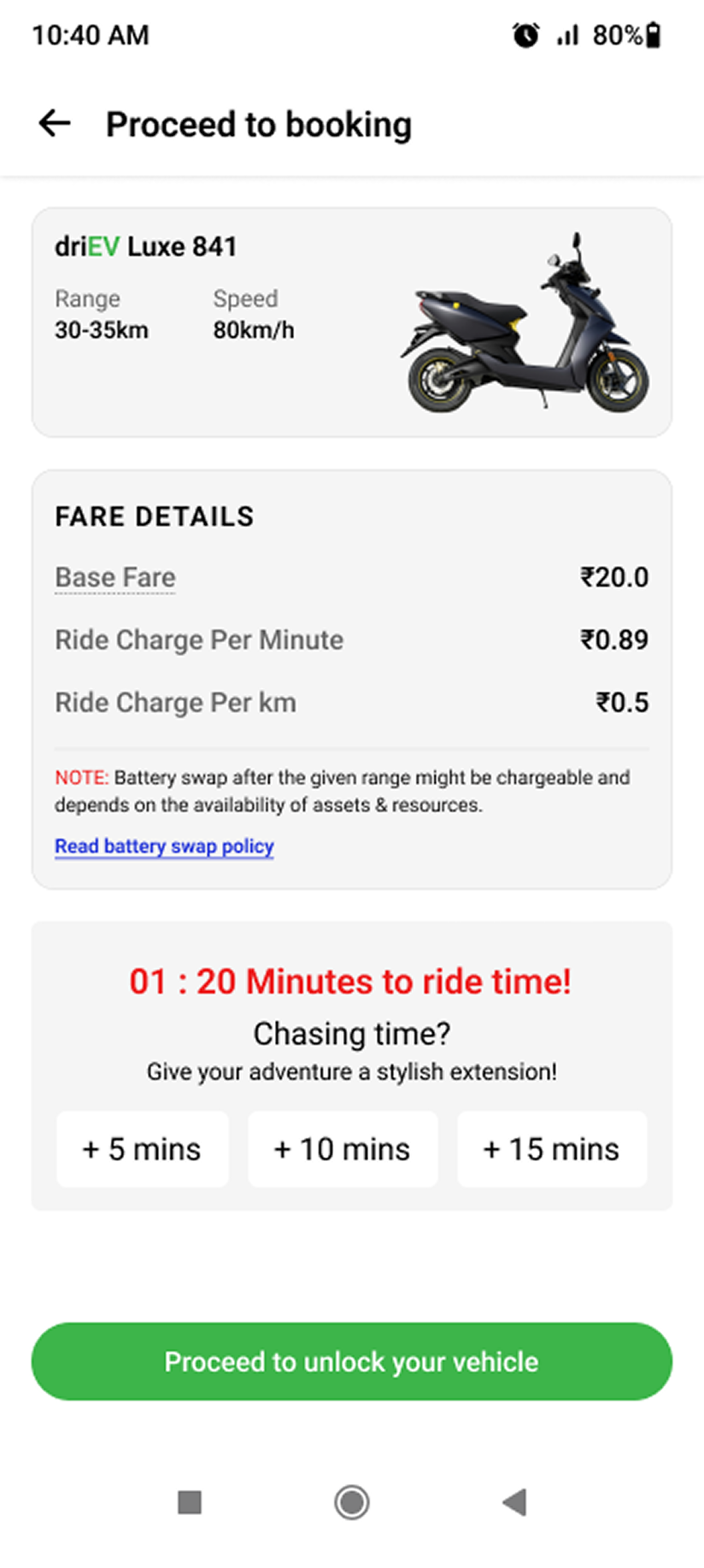
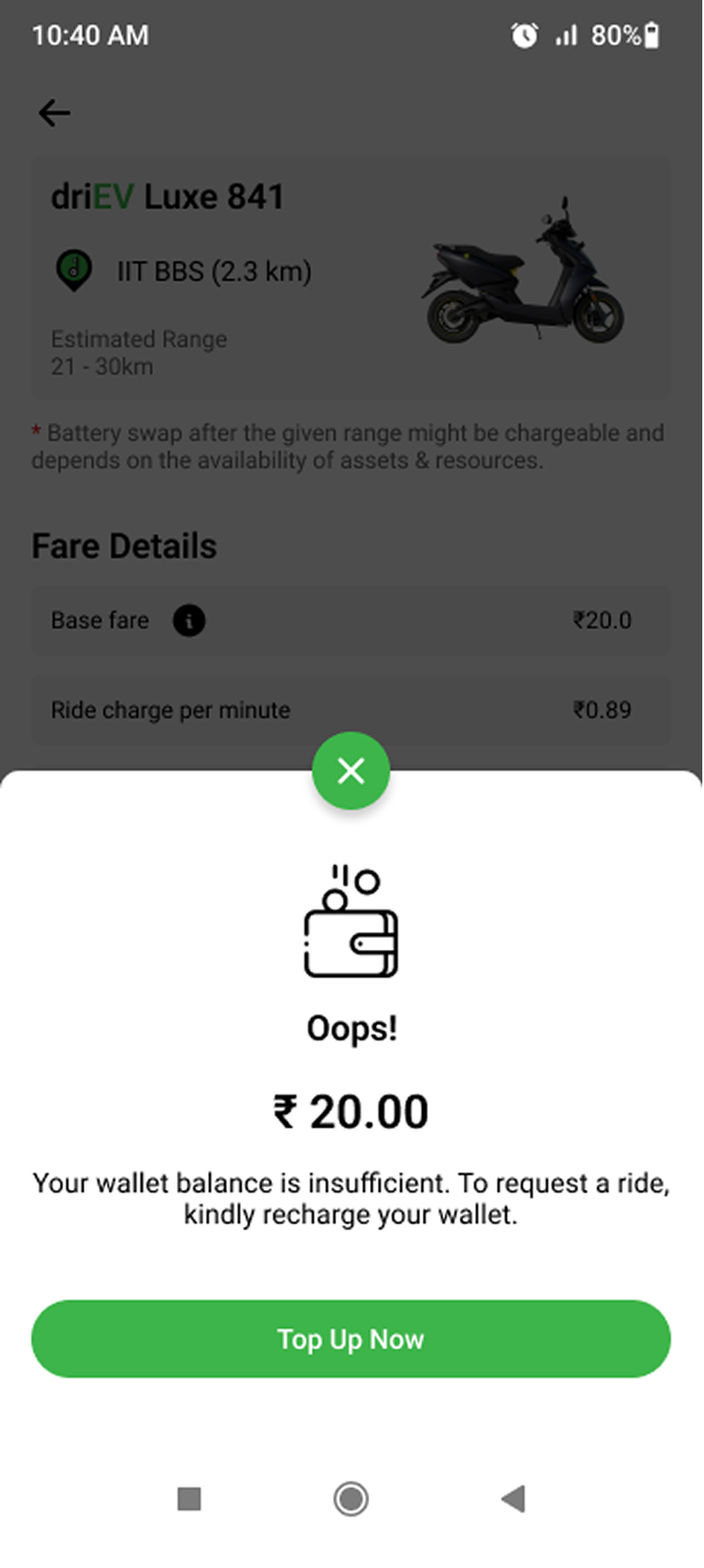
Students reserve a vehicle for a future slot by paying a small token, based on the time window. The token becomes part of the ride cost, and the booking converts automatically when the slot opens.
Edge cases designed. No vehicle becoming available, and double pre-booking — with automatic refunds and rebooking prompts.
The brief never asked for pre-book. It came from watching what students still struggled with after V1 shipped.
Five decisions that built trust
- V1Live battery and estimated range
On every vehicle card, so low charge is never a surprise.
- CoreCampus-locked station access
A campus ID limits each student to their own college’s station.
- V2Pre-book with a token payment
The flagship feature. Peak-hour demand becomes a planned booking.
- V2Smart availability notifications
Students get told when a vehicle frees up instead of refreshing the app.
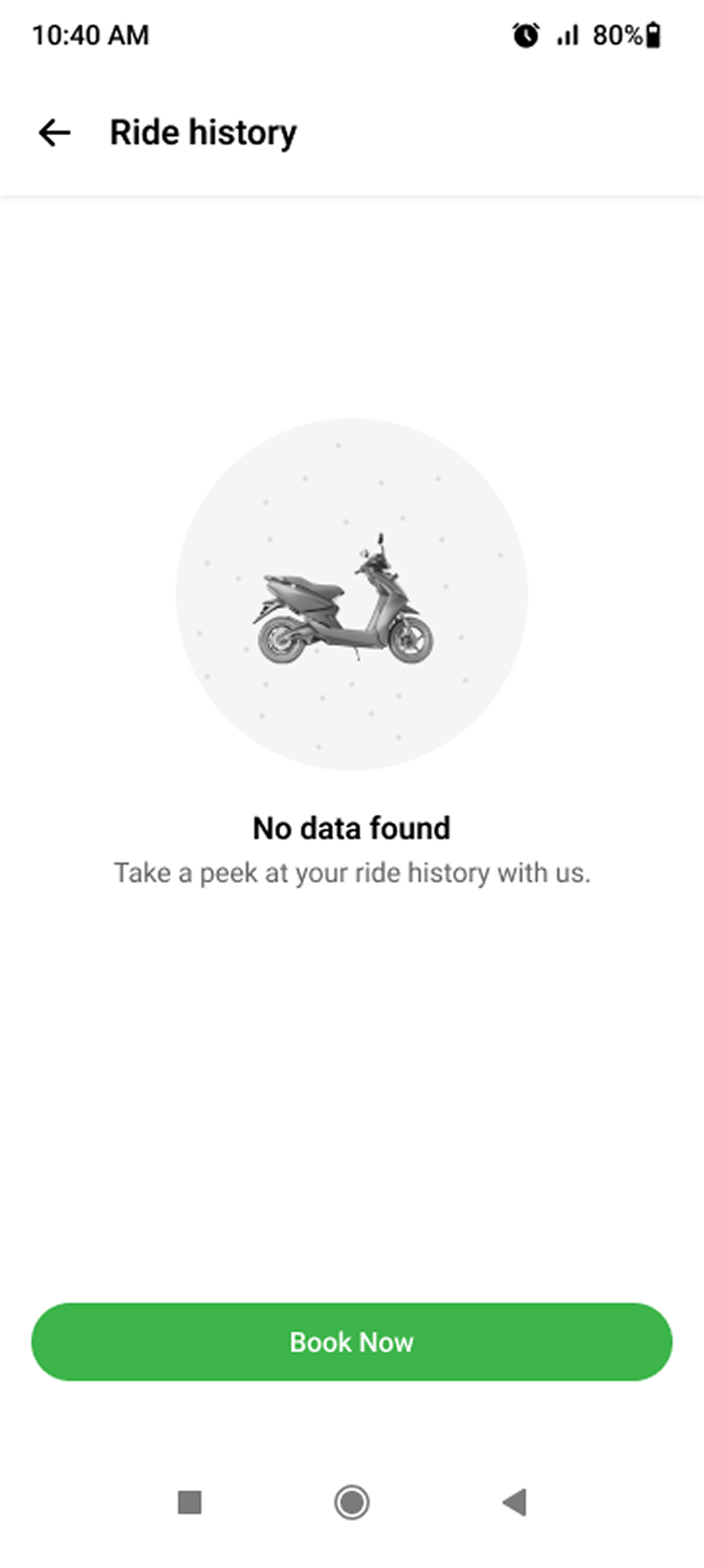
- CoreRide history and spend breakdown
Costs are split by minutes and kilometres, matching the pricing model.
The app, from first ride to pre-book
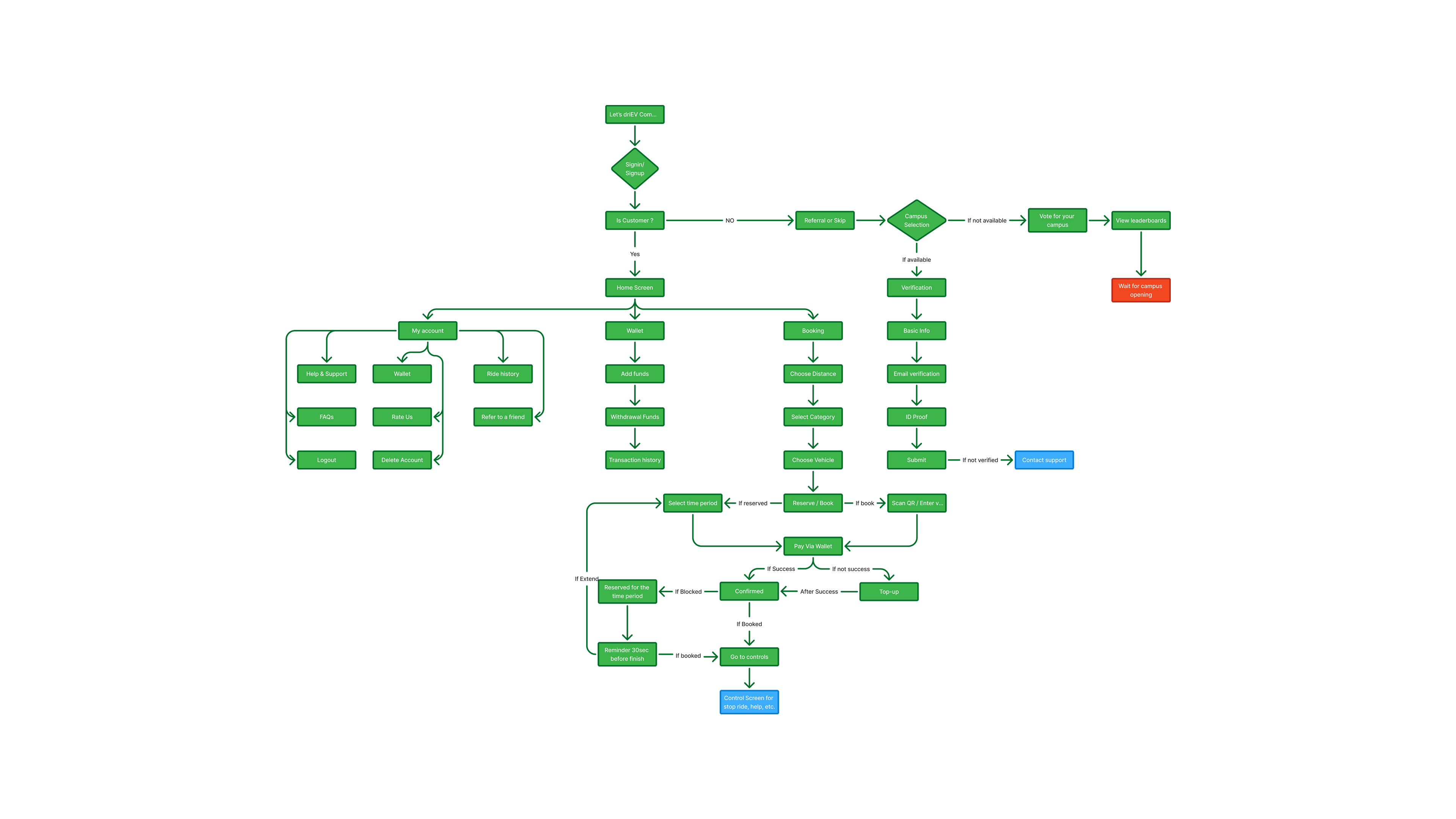
User flow diagram
App screens
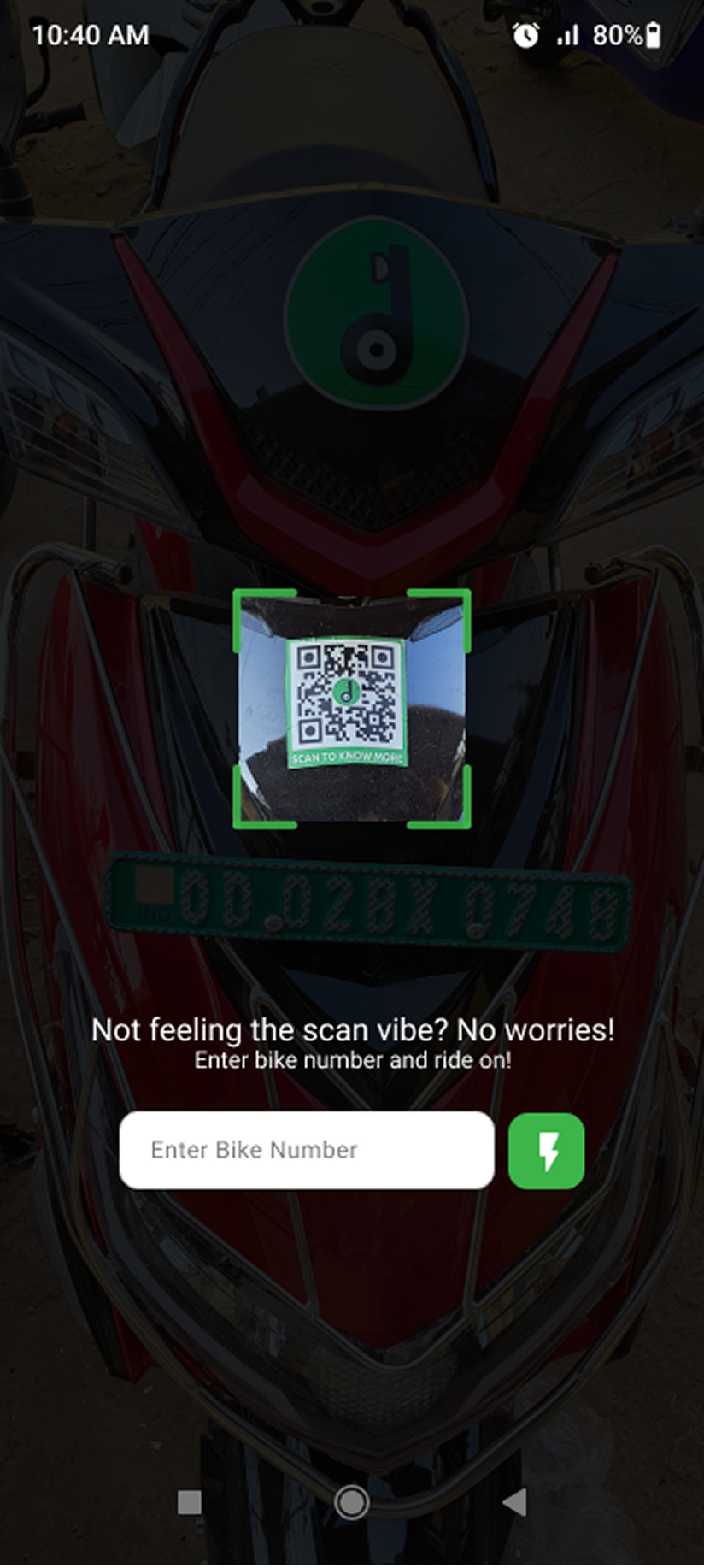
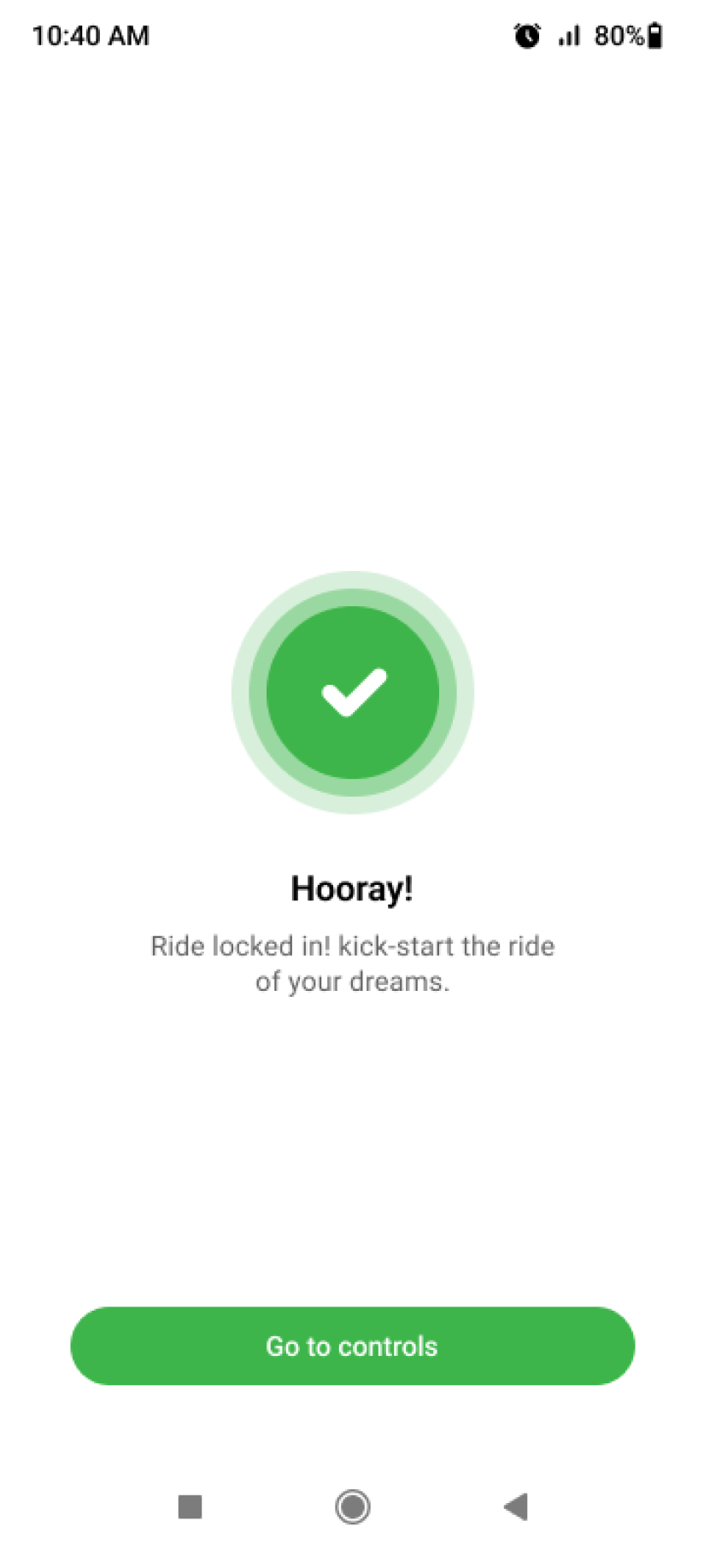
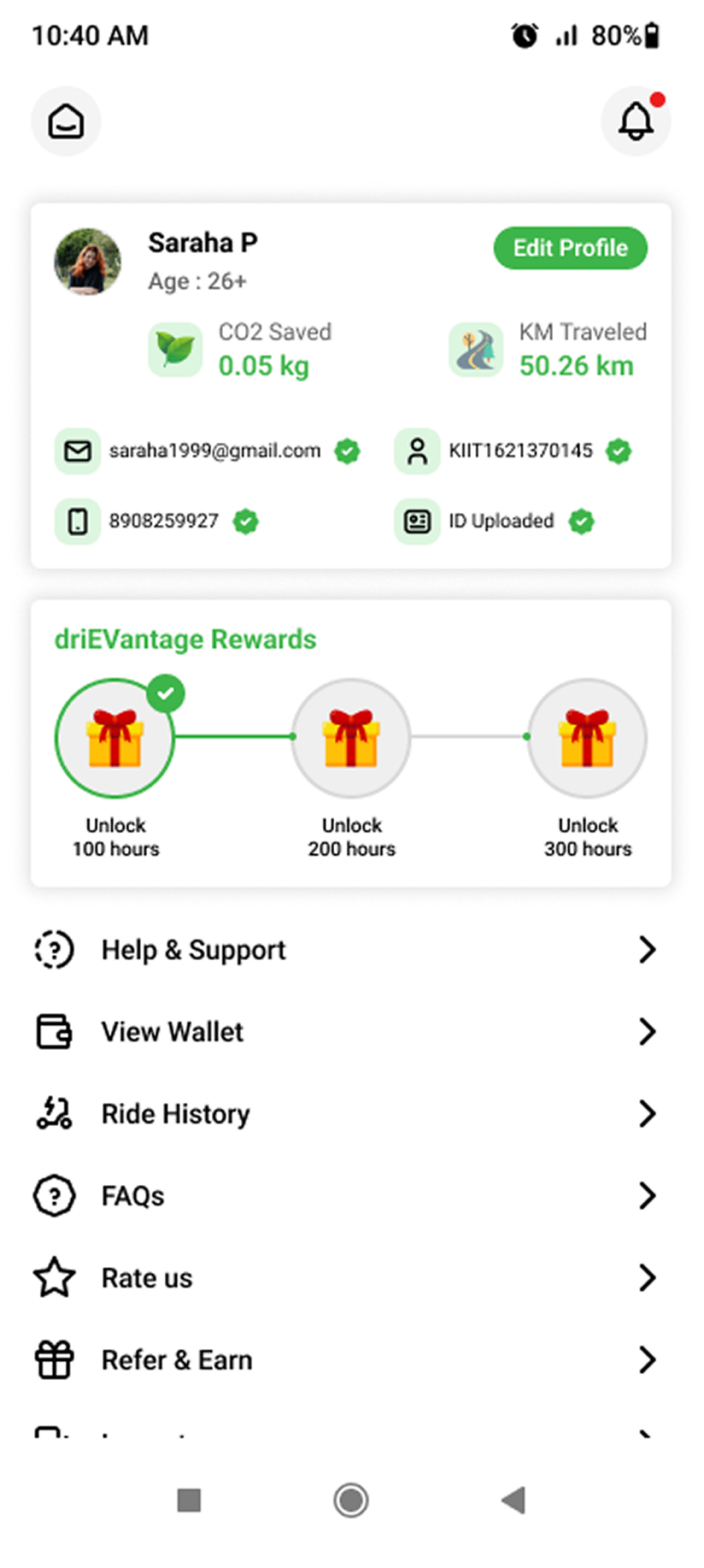
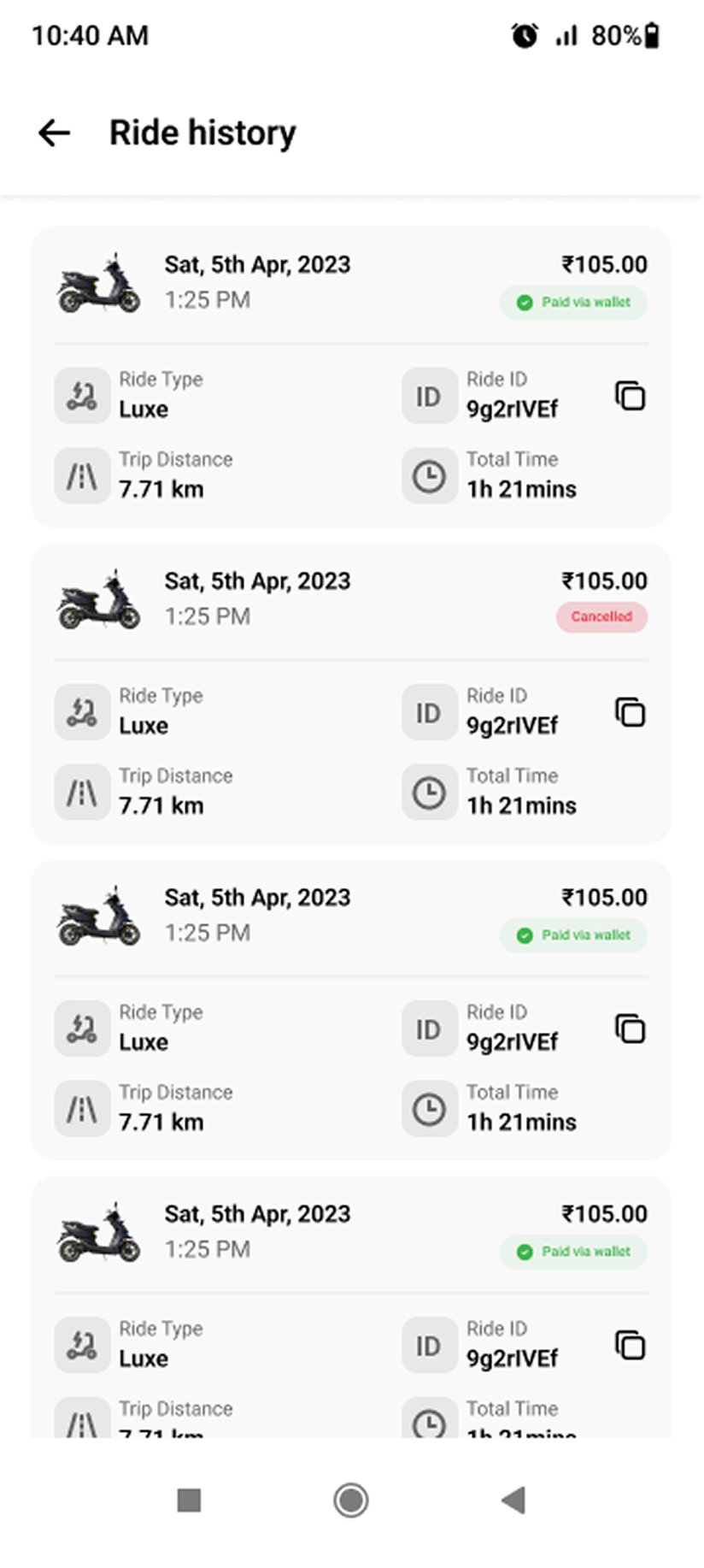
WhatsApp was removed from community bookings
The app didn’t have analytics in place while I worked on it, so I’m sharing what changed rather than estimates.
- WhatsApp booking was eliminated for community bookings, with no manual handling by the operations team
- Live battery and range answered students’ main concern before a trip
- Pre-book turned peak-hour lost demand into booked revenue
- Every ride is now logged with time, distance, cost and user, giving the business operational data it lacked
The real problem is often different from the obvious one.
The brief was a booking app. The feature that mattered most — pre-book — only appeared after real students used V1. Shipping early and listening carefully beat designing the perfect version up front.
Next case study